How to Estimate a Kitchen Remodel, Line by Line
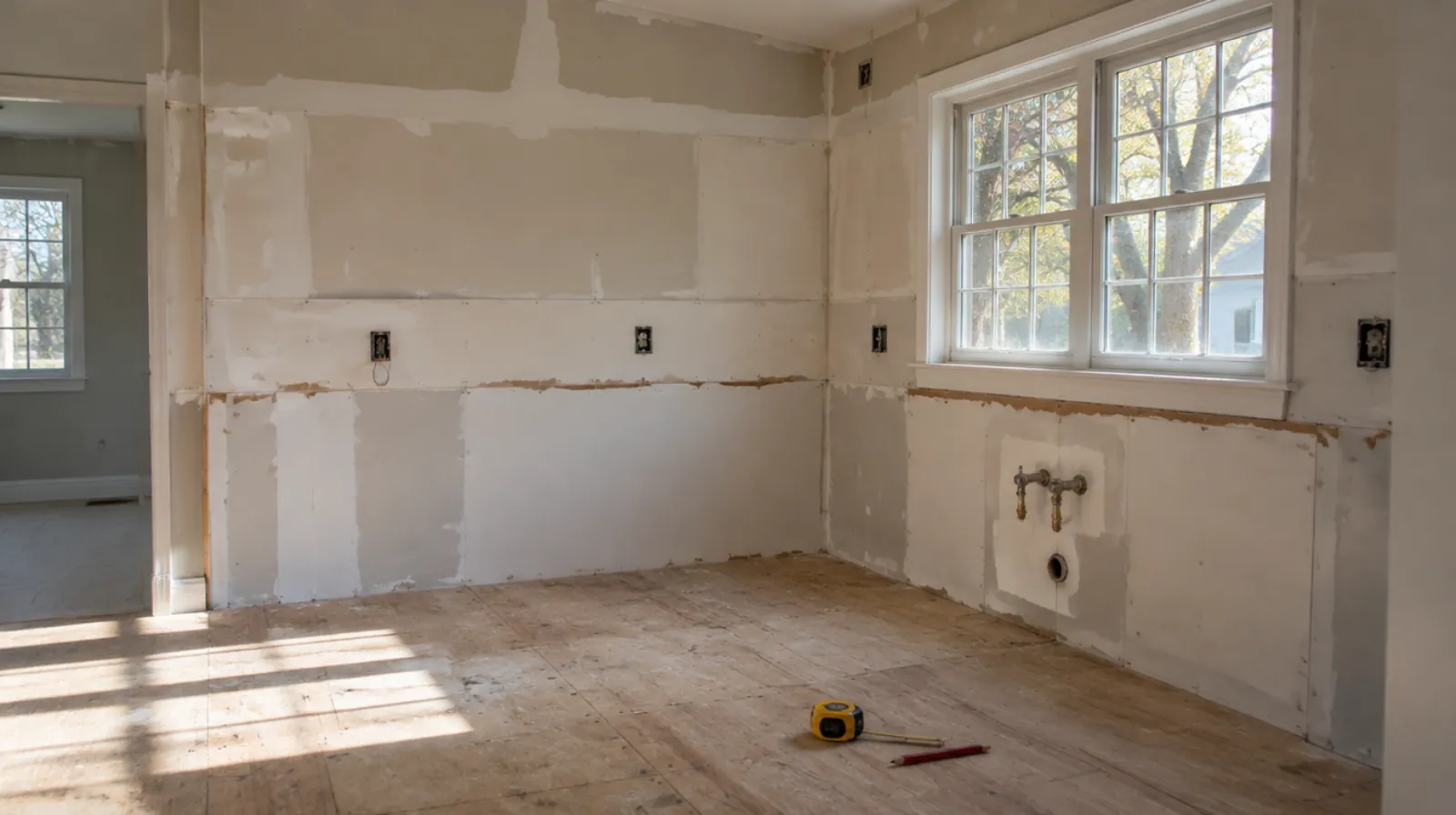
Start with the work you can describe and measure. Put the scope, the quantity, the unit price, the supplier and the installer on each line. That makes the estimate easy to explain to the homeowner. It also gives your crew something to check the job against once the work starts. To add up one job from its parts, the free job cost calculator shows the price, the profit and the margin.

Walk the kitchen and write down the scope
- Measure
Walls, ceiling height, cabinet runs, floor and backsplash.
- Mark what moves
Where the sink, outlets, range and hood are now, and where they go.
- Plan the access
How cabinets get into the house, where materials and debris go, and when the family needs the rest of the house.
- List the choices
What stays, what the homeowner supplies, and what still needs a selection.
Write down the work that goes with each change. Moving a sink can touch plumbing, cabinet fit, flooring and wall repair. Taking out a soffit can leave drywall and paint work past the cabinet run. A new range may need an electrical quote or a different hood duct. Settle those before you send the drawings out for prices.
Use lines you can point to later, like "keep and reinstall the existing dishwasher" and "owner supplies the pendant lights." Agree on who handles delivery, hookups and missing parts.
Build the estimate in the order you will do the work
Give each row a description, quantity, unit, unit cost, line cost and source. A vendor quote, a measured takeoff or your own crew records can back a number. Add a note on what the price covers, and date each vendor quote.
| Group | What to count |
|---|---|
| Protection, demo and disposal | Floor protection, dust barriers, debris hauling, disconnects, and which appliances or cabinets you save. |
| Crew labor | Hours for layout, demo, framing, cabinets, trim and cleanup, at your own labor cost. Two people for one hour is two worker-hours. |
| Materials and delivery | The cabinet schedule with fillers, panels, toe kicks and hardware; flooring and transitions; the countertop from a measured drawing. Tax and delivery where they belong. |
| Trades and job fees | Send each trade the same scope. Check who supplies fixtures, patches openings and makes return trips. Add fees and rentals once. |
| Finish and closeout | Caulk, touch-up paint, final cleanup and punch-list time. Walk the lines once more for anything counted twice. |
Keep allowances, unknowns and markup apart
Use an allowance when you know the homeowner will pick something but you do not have the final price. Say what it covers. A tile allowance should say how much tile you carried and whether delivery, setting materials, trim and install are priced on other lines. When the homeowner picks the tile, compare its price with the allowance on the same basis. For more, see what an allowance is in construction.
Write hidden conditions down as an assumption, or as an item to review once the wall is open. If you carry a contingency in your own budget, keep it apart from the allowances, so you can see which money is for unsure work. Agree with the homeowner on how changes get written down if the crew finds work the scope did not cover.
Add up the cost you expect to carry before you set the price. Decide how the price covers business overhead and leaves room for profit. Say which costs you included and whether company overhead is on top. See markup vs. margin for the full math.
Fictional worked example: a kitchen remodel estimate
| Line | Basis | Cost |
|---|---|---|
| Protection and disposal | Barrier and floor-covering supplies, haul-off | $1,450 |
| Crew labor | 160 worker-hours x $45 per worker-hour | $7,200 |
| Cabinets and hardware | Supply quote with fillers and panels | $6,800 |
| Countertops | 42 sq. ft. x $85 installed | $3,570 |
| Electrical and plumbing | $2,400 electrical + $1,800 plumbing | $4,200 |
| Flooring and finish supplies | Flooring, underlayment, trim and paint | $1,200 |
| Permit and delivery | Combined for this example | $580 |
| Fixture and backsplash tile allowance | Sink, faucet, tile and setting supplies | $1,000 |
| Direct costs | Sum of the eight lines | $26,000 |
| Contingency in your own budget | Money for unsure work | $1,000 |
| Planned job cost | Direct costs + contingency | $27,000 |
In this fictional estimate, a 25% markup adds $6,750 to the $27,000 planned job cost, so the price is $33,750. $6,750 divided by $33,750 is a 20% planned margin before company overhead. If the costs change, so does the margin. Say the contract also holds back 5% of a $10,000 progress bill: $9,500 is due and $500 is held until release. See what retainage is and how to track it.
Track changes and job costs after the yes
Save the accepted scope and price as your starting point. If the homeowner asks for another cabinet, or the crew opens a wall and finds damage, write down the added work, the costs and any schedule change. Keep proposed and approved changes apart, so the crew knows what is in the working scope. Keep the first estimate to compare against. See change order tracking.
Spreadsheet or Job Cost Pro
A spreadsheet can hold the estimate and the job review. Keep one tab for the first estimate and one for recorded costs and approved changes, with the same lines on both. Keep the receipt or quote reference next to each cost, and set a time each week to enter receipts and hours and check the totals.
Job Cost Pro reads a photo of a receipt. When a purchase receipt names the job or its PO, the app suggests the job; tap once to confirm. With a jobsite address set, the iPhone app can prompt a worker who has their own login to clock in on arrival, and one tap clocks them in. On an open job, the job shows its cost so far and its margin, and the AI Job Briefing (Pro and up) gives a financial summary. Keep your own list of the work still ahead.
Start with Job Cost Pro on your next kitchen job. Free plan: 3 active jobs at a time, 50 receipts a month. Free plan available. Some features require a paid plan.
Track your next job with Job Cost Pro
Scan receipts, confirm the suggested job, and see your recorded costs against your budget. Start with the free plan in your browser or get the iPhone app.
Google Play: US only.
Free plan available. Some features require a paid plan.
FAQ
What should I do before pricing cabinets?
Check the room size, the appliance sizes and where doors and drawers open. Ask the supplier to put fillers, finished ends, hardware and delivery in the quote, or list them as their own costs.
How do I estimate labor for a small crew?
Estimate worker-hours for each task and multiply by your cost per worker-hour. Check a similar finished job if you have one. Count setup, trips, cleanup and the final walk-through.
Can I estimate the job before the homeowner picks finishes?
Yes. Price the known scope and label each allowance. Say what each allowance covers, and ask for the picks that affect install before you order or set the final schedule.
When should I recheck a supplier quote?
When a selection or a quantity changes, when delivery moves, or when the quote expires. Ask if tax, freight and install are included, so the right costs go into the price.
What if the crew finds work that was not in the estimate?
Write down what they found and which part of the scope it changes. Price the added work, note the schedule effect, and follow the approval steps in the agreement before it joins the working scope.